2025 – Our Work This Year
Hookers, dykes and women of colour celebrate 50 years of making trouble, making history
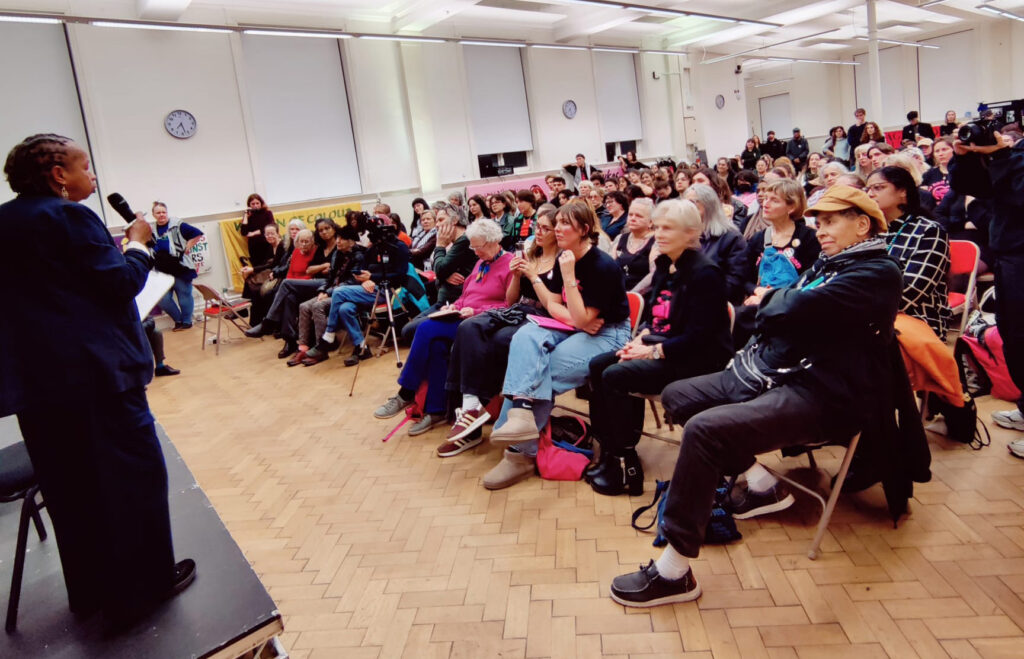
The year 2025 marks the 50th anniversary of the ECP. Along with Women of Colour in the Global Women’s Strike and Queer Strike, which are also celebrating their 50th anniversary, we held a sold-out event at the Bishopsgate Institute. All three organisations were founded as autonomous groups within the Wages for Housework campaign and have spent decades organising side by side at the Crossroads Women’s Centre.
The event was an engaging and exciting evening. Each organisation presented video footage and powerful commentary on their work over the decades. Attendees were eager to hear how the organisations had survived for so many years and what they have achieved. Questions focused on what lessons can be applied to today’s work in building a movement against poverty, discrimination and injustice.
Guests also explored the photo exhibitions and stocked up on Christmas gifts, including T-shirts and publications. The archives of the ECP are already housed at the Bishopsgate Institute and those of Queer Strike and Women of Colour in the Global Women’s Strike will open there in 2026, preserving this precious history.
Fighting Against “Prostitute’s Cautions”
We launched our report Proceed Without Caution: The Impact of ‘Prostitute’s Cautions’ and Convictions on Sex Workers’ Lives at the House of Commons in autumn 2024, with over 100 attendees — including MPs and international speakers. We got a lot of media coverage including by The Guardian, BBC Woman’s Hour, Novara Media, The Lead, and The Big Issue.
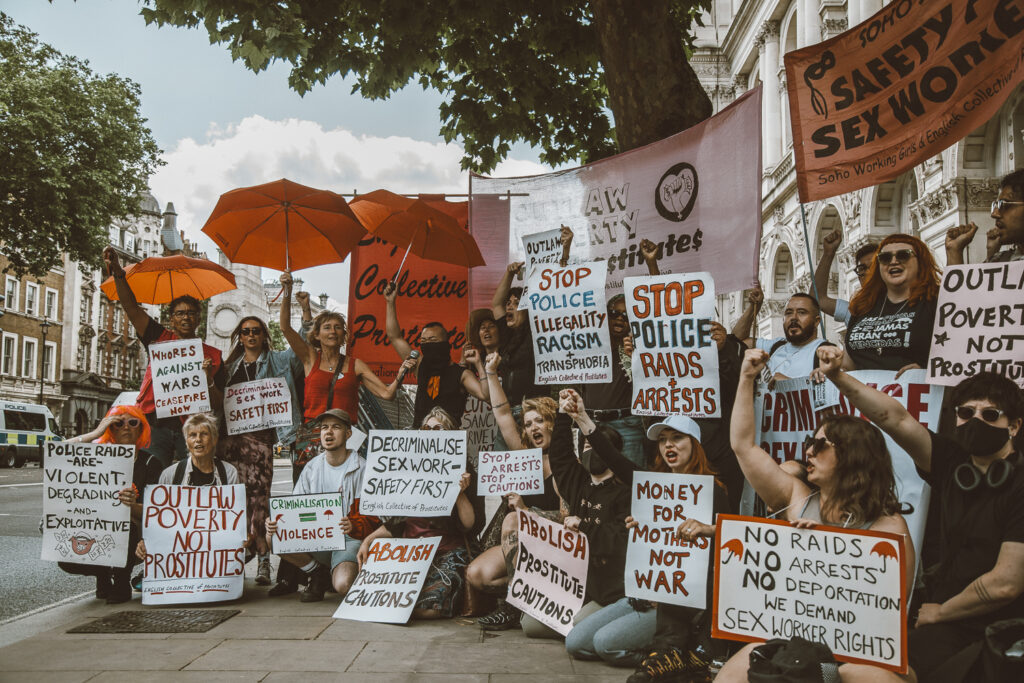
As the campaign moved into 2025, we issued an Open Letter to Home Secretary Yvette Cooper, endorsed by 80 other organisations, demanding an end to “prostitute’s cautions” and the wider criminalisation of sex work. On 2 June (International Sex Workers’ Day), we took our demands to Downing Street with a protest and will continue to press MPs for change.
The Government has recently announced a change in the law which will expunge criminal records for “child prostitution”, impacting many women in our network who received cautions and convictions for loitering and soliciting before they turned 18. We are demanding that the Government extend this to all women and decriminalise sex workers.
A Win in Parliament – Blocking Harmful Laws
When a Labour woman MP, Tonia Antoniazzi, proposed dangerous new laws in the Crime and Policing Bill 2025 — clauses that would have criminalised sex workers’ colleagues, friends, drivers, and even online advertising sites — we worked with the coalition Decrim Now to build a national campaign to oppose them. We submitted evidence to Parliament, held lobbying workshops and mobilised hundreds of people to contact their MPs. Sex workers spoke about the harm caused to them by these proposed amendments at workshops and at our public protests. The amendments were dropped which was a huge collective win — though we know similar threats may return.
Strengthening sex workers’ rights
Through our helpline and drop-ins, we supported many sex workers to fight for justice after violent attacks as well as when faced with criminal charges, child custody cases, benefit claims, financial discrimination and many other issues. A key victory came in July. Jasmine, a mother and sex worker in our network, was wrongly charged with brothel-keeping for simply creating a safe space for women to work together. With legal and community support, the charges – which should never have been brought — were dropped.
Strengthening networks
We worked closely with groups like Street Workers Collective Ireland, Decrim Now, Safety First Wales, Scotland4Decrim, Amnesty International, Women Against Rape and the European Sex Workers’ Rights Alliance.
With Scotland4Decrim, we gave evidence to the Criminal Justice Committee of the Scottish Parliament to oppose a bill aimed at increasing the criminalisation of sex work through the criminalisation of clients.
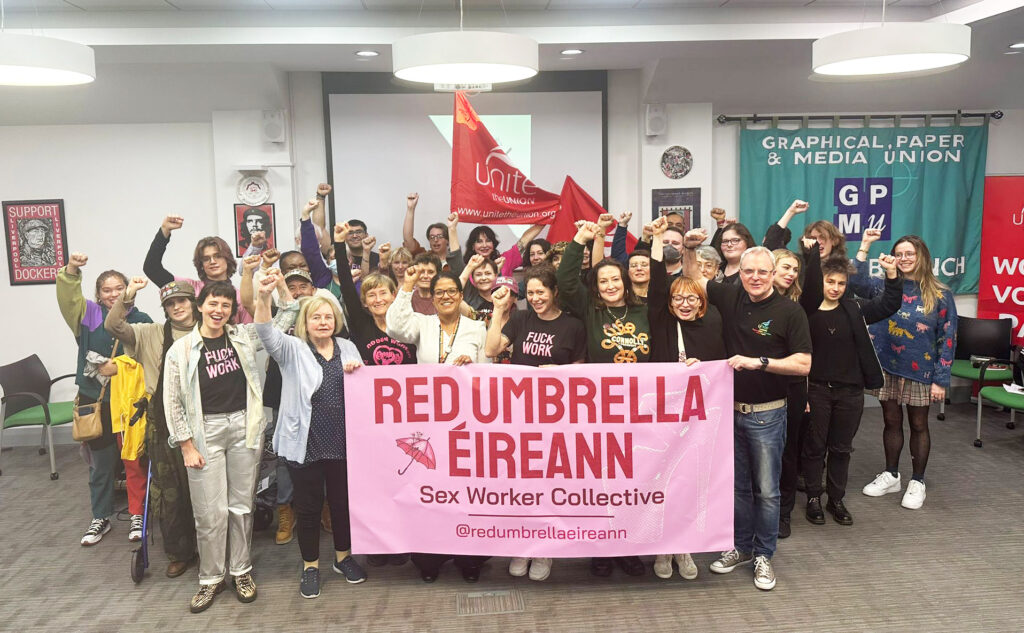
We were invited by Red Umbrella Éireann to speak on a panel with civil rights leader Bernadette McAliskey and representatives of Unite the Union, on how sex workers’ have organised over the years and the possibilities of unionising. We were also glad to be invited by Safety First Wales to speak alongside other sex worker groups and Amnesty International at an event and exhibition that they organised in Swansea.
For two weeks in October, we were delighted to be joined by Rachel West from our sister organisation US PROStitutes Collective. Rachel spoke at various events presenting the findings of the year-long historic Guaranteed Care Income pilot programme that she co-ordinated in San Francisco. Ten single mothers at risk of incarceration and/or losing custody of their children got unconditional cash payments for a year and participants reported massive improvements in the health and welfare of themselves and their children.
Making sex workers voices and experience heard
We interviewed sex workers in our network — including migrant women, women of colour, mothers, trans and street-based workers — about their experience of policing, criminalisation, and discrimination and published our initial findings to mark International Day to End Violence Against Sex Workers.
We gathered testimony from sex working mums and will publish a dossier on this early in the new year.
We worked to ensure that sex workers’ voices and experience are heard within health authority projects and specialist VAWG (violence against women and girls) organisations. This included challenging the use of misleading terms such as “commercial sexual exploitation,” which are increasingly deployed to justify policing and immigration crackdowns. Women are often labelled as “victims” regardless of how they describe their own experiences, and anyone they associate with is automatically treated as an exploiter. This approach fuels further criminalisation and can cut women off from vital support because they do not “fit” neatly into prescribed categories.
Outreach projects from across the UK consulted us for guidance on how to advocate effectively to statutory authorities on behalf of the women they support, including survivors of violence and women seeking access to the benefits and resources they are entitled to.
—–
Our work has been featured in The Big Issue and OpenDemocracy.
Our work continues: to win decriminalisation and safety and end women’s (and particularly mothers’) poverty. We thank everyone who has supported us.